**Merry Christmas and Happy New Year to all our valued customers!**
Our offices will have adjusted hours for the Christmas and New Year holidays. We will be open for half-days on December 24th and 31st, and CLOSED from December 25th to 28th. We will resume normal operations on December 29th and REOPEN after New Year’s on January 2nd.
Welcome to our comprehensive guide on peptides for injury recovery, where we delve into the fascinating world of bioactive peptides and their remarkable benefits in accelerating the healing process.
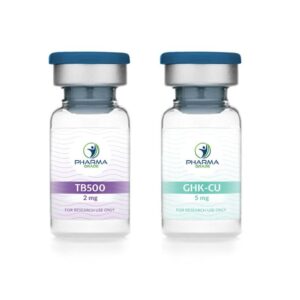
In this blog, we explore how peptides such as BPC-157, TB500, and GHK-Cu play a pivotal role in promoting tissue repair, wound healing, reducing inflammation, and enhancing overall recovery from injuries. Discover the science behind these peptides, their mechanisms of action, and how they can optimize the healing of various injuries, ranging from muscle strains to joint damage.
What are Peptides?
Peptides produced using amino acids that connect together. They have numerous capacities in the body, including flagging and informing. Some may require demonstration like synapses, while others may act like hormones. Peptides are quite specific, which makes them sheltered, very much endured, and all the more significantly enables them to control and impact how our bodies respond to physical exercise and diet.
There are natural substances in the body that can expand the rate of the recovery process including wound repair, muscle repair and tissue regeneration – even connective tissue fix. This can be invigorated promptly with development hormone secretagogues and specific peptides. Secretagogues and peptides are substances that reason another substance to discharged; for this situation, development hormone.
Peptides to Aid Injury Recovery
The development hormone is genuinely adept at speaking with tissue cells in the arrangement of new cells, development factors, muscle filaments, and, joint revival. Secretagogues and peptides can work to invigorate GH discharge from the pituitary for this fix and recovery component to kick in snappier. The following are a rundown of peptides that improve quick injury recuperating;
Thymosin Alpha-1
Thymosin advances vein, muscle cell, and skin cell recovery and movement, bringing about increasingly quick and successful injury fix just as quicker recovery from injury. Thy beta is invigorated from the thymus organ.
MGF
Mechano Growth Factor (MGF) is a potent inducer of muscle development. It causes muscle cells in injury to part, making new muscle cells and bringing about muscle development and fix. It is essential for injury recovery, repair, and growth of new cells.
IGF-1
IGF-1 is the cutting edge in execution improvement for muscle building. It is the most significant development factor that our bodies produce, much more so than HGH.
CJC-1295/Ipamorelin
CJC-1295/Ipamorelin mix strongly affects the arrival of Growth Hormone and IGF-1 and diminishes muscle to fat ratio by constraining your body to consume its fat stores as a wellspring of vitality. This combo is likewise known to build cell fix, injury recovery, and collagen generation.
BPC & TB500 Blend
These combined peptides BPC157 and TB500 promote faster injury recovery and healing in joints, muscles, cognitive tissue, and bones. They will also guard against and prevent recurring injuries. This peptide blend functions by building strong muscle and skeleton, enhancing the flexibility of tissues, tendons, ligaments, and joints.
Conclusion
There are many peptides on the market that can aid injury recovery. As we get older, or as people work out more and with more vigour the more likely injuries will occur. In the future it is hoped that Peptides can not only reduce the time taken for injury recovery but they can also work to prevent injuries from occurring in the first place by strengthening bones, and increasing muscle mass and strength. Wound healing post surgery is also a discussion in our latest blog.
References:
[1] Song R, Choi HM, Yang HI, Yoo MC, Park YB, Kim KS. Association between serum thymosin β4 levels of rheumatoid arthritis patients and disease activity and response to therapy. Clin Rheumatol. 2012 Aug;31(8):1253-8.
[2] Teichman SL, Neale A, Lawrence B, Gagnon C, Castaigne JP, Frohman LA. Prolonged stimulation of growth hormone (GH) and insulin-like growth factor I secretion by CJC-1295, a long-acting analog of GH-releasing hormone, in healthy adults. J Clin Endocrinol Metab. 2006 Mar;91(3):799-805.
[3] Kandalla PK, Goldspink G, Butler-Browne G, Mouly V. Mechano Growth Factor E peptide (MGF-E), derived from an isoform of IGF-1, activates human muscle progenitor cells and induces an increase in their fusion potential at different ages. Mech Ageing Dev. 2011 Apr;132(4):154-62.
Frequently Asked Questions
What are the best peptides for injury recovery?
Researchers often study BPC-157 and thymosin β4 (TB-500) for injury recovery because these peptides support tissue repair, reduce inflammation and promote healing in models. Studies also show that GHK-Cu can support wound healing and collagen production. These peptides continue to gain interest as research explores their roles in different recovery processes.
Can peptides for injury recovery help with tendon damage?
Research models show that BPC-157 and thymosin β4 can help tendons heal by enhancing fibroblast activity, guiding collagen fiber alignment, and supporting stronger tissue growth. These peptides also show faster recovery patterns in tendon-injury studies. Because of these effects, researchers continue to explore ways to improve tendon healing in controlled environments.
Do peptides really help injuries heal faster?
Studies show that specific peptides can accelerate healing by improving blood flow, reducing inflammation, and promoting new tissue growth. In models of muscle, tendon, ligament, and wound damage, peptides such as BPC-157 and thymosin β4 often produce faster recovery responses. These findings continue to drive interest in peptides within injury-repair research.
Can peptides for injury recovery repair cartilage?
Cartilage studies show that some peptides can boost chondrocyte activity, increase collagen support and help protect joint tissue. These effects appear in lab and animal models exploring cartilage stress and repair. Because these peptides show helpful responses in these settings, researchers continue to investigate their potential roles in cartilage recovery.
Are peptides for injury recovery FDA approved?
Peptides studied for injury recovery, such as BPC-157 and thymosin β4, do not hold FDA approval for treating injuries. Research teams study them in controlled settings to understand their structure, activity and possible benefits. Their current use focuses on experiments that explore how these peptides behave in different injury-recovery models.
ALL PRODUCT INFORMATION AND ARTICLES ON THIS SITE ARE FOR EDUCATIONAL PURPOSES ONLY
DISCLAIMER: All products sold by PharmaGrade.Store are for research and laboratory use only. These products are not designed for use or consumption by humans or animals. They are not to be classified as a drug, food, cosmetic, or medicinal product and must not be mislabelled or used as such. By purchasing from our Website the buyer accepts and acknowledges the risks involved with handling of these products. All articles and product information provided on this Website are for informational and educational purposes only. Handling and use of these products should be restricted to suitably qualified professionals
Boost Wellness with Hexarelin & CJC-1295 No DAC Italy Peptides are one of the most essential components of the human body. They regulate numerous biological processes and can be an effective tool in aiding medical
Impact of Thymosin Alpha-1 & LL-37 Italy on Immune Health The human immune system is the body’s natural defence mechanism against pathogenic invaders. It is a complex network of organs, cells, and molecules that work
Peptide Therapy Italy : Healing Tendonitis & Repairing Tissue A comprehensive guide to peptide therapy for tissue healing, with a focus on the effectiveness of potential peptide therapies for tendonitis treatment, tissue regeneration, joint pain,
HCG Italy Boosts Fertility for Men and Women: A Complete Guide HCG boosts fertility: Fertility is a topic that’s always evolving, with new treatments and discoveries constantly emerging. One such breakthrough is the use of